Yang Hai, an assistant professor of chemistry and biochemistry at UC Santa Barbara, was staring down a critical funding drought — a roughly three-month administrative delay in federal support. The stall threatened to grind his lab’s momentum to a halt.
He had already been forced to make the painful decision to let two postdocs go. He faced the prospect of turning away a promising graduate student because he couldn't guarantee resources for experiments.
"It is not possible to recover," Hai said, noting the potential damage to his research momentum. "It’s not only because of salary, but also the morale. When students see there is no funding, they lose hope in the science."
Then, a lifeline appeared. It didn't come from a government agency, but from a source much closer to home: The Stanley and Leslie Parsons Fund in Biochemistry.
Established in 2020 by Emeritus Professor Stanley Parsons and his wife, Leslie Odell, the fund was originally designed to recognize distinction in biochemical research. However, because of the agility of private philanthropy — which lacks the rigid restrictions of federal grants — it became something far more vital.
"This fund gave me a straw to hold onto to survive through this tough period," Hai said.
The discretionary funds allowed Hai to purchase essential reagents and keep his remaining team employed. Crucially, it allowed a graduate student to forgo teaching assistant duties and focus entirely on research. During that saved summer, the student utilized genome mining to identify a lead compound showing "promising antibiotic activity.”
A gift rooted in experience
The impact of the fund is a direct reflection of its donors. Stanley Parsons served on the UC Santa Barbara faculty for 46 years, a tenure marked by distinguished research in biochemistry and neurochemistry relevant to Alzheimer’s disease and other conditions. He understands the anxiety of the grant cycle intimately.
"We never contemplated what would happen if the money got cut off," Parsons said humbly, reflecting on how his and Leslie's gift was utilized. "I’m glad the money was there and rescued them. It’s good when money does more than you expected in the beginning."
For Parsons and Odell, a UCSB alumna and former executive at Tecolote Research, the endowment was meant to celebrate scientific excellence. Seeing it act as a bridge over bureaucratic hurdles has added a new dimension to their legacy.
Three examples of impact
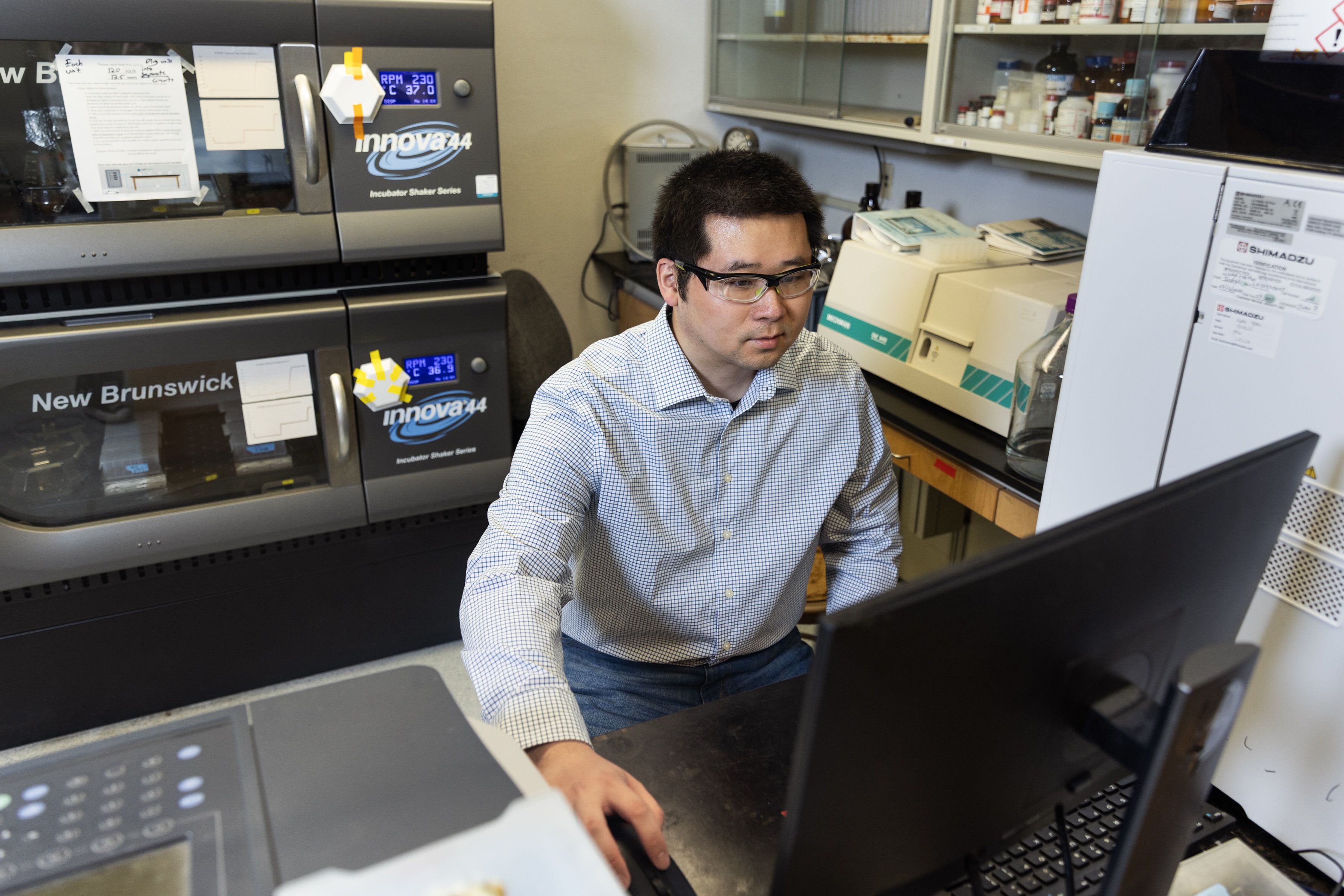
The Parsons Fund has quickly become a catalyst for high-risk, high-reward science across the Department of Chemistry and Biochemistry.
Lior Sepunaru, a previous recipient of the award, used the funds as "seed money" to explore a bold idea that federal agencies might have deemed too risky for initial funding. His work focuses on RNA droplets — tiny, liquid-like compartments that may hold the secret to how life began.
"One of our most important discoveries first supported by this fellowship is that tiny droplets made of RNA can host chemical reactions that behave very differently than they do in ordinary water," Sepunaru explained. "Inside these droplets, the basic energetic rules of chemistry change."
Like Hai, Sepunaru was able to leverage the data made possible by the Parsons Award to secure a major federal grant titled "Bioelectrochemistry at the Nanoscale."
Yang Yang, another recipient, noted that the "generous, discretionary funding" allowed his group to pivot and "explore new research directions" that would have otherwise remained theoretical.
Inheriting a legacy
For Hai, the connection to Stanley Parsons is more than just financial; it is physical. When Parsons retired, Hai took over his laboratory space. He sits in Parsons' old office and admits his students still utilize equipment and glassware left behind by the Parsons lab.
"I take it personal. I feel I have to keep the legacy," Hai said. "When I receive the funds from Stan Parsons, it feels special. It motivates me to work harder."
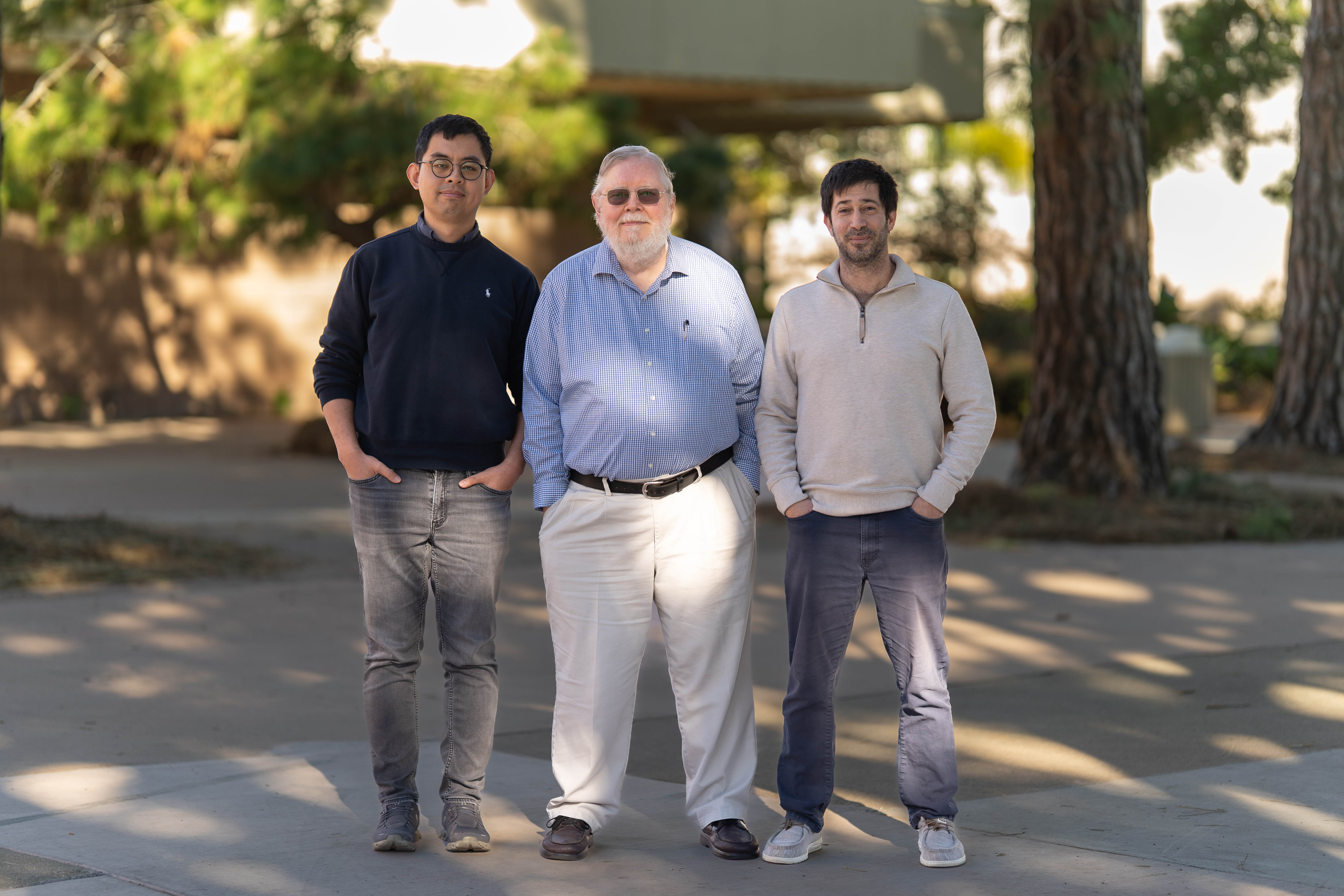
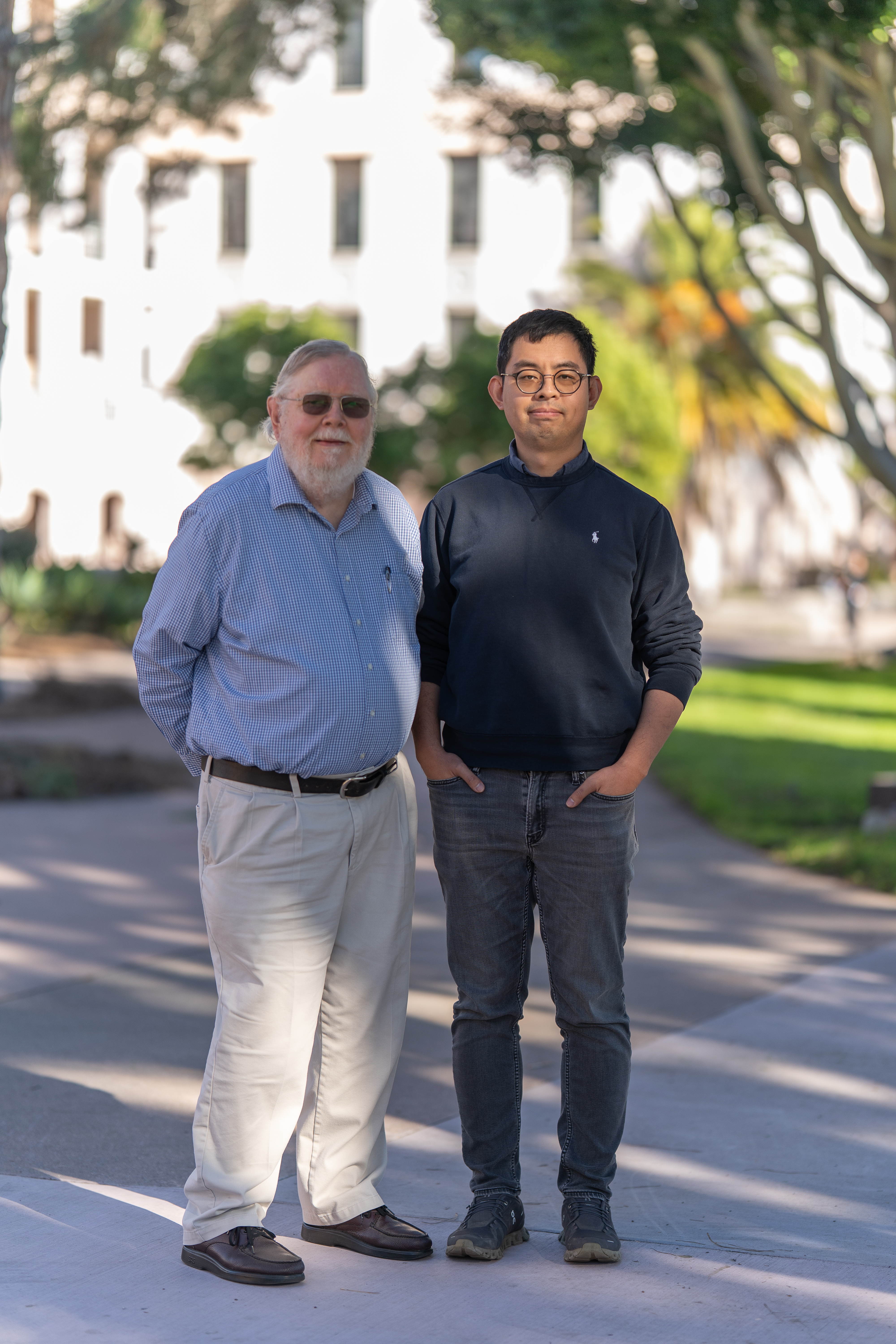
When Parsons gathered recently on campus for a portrait with Sepunaru and Hai, the image captured more than a meeting between donor and recipient. It illustrated a living continuity of scientific inquiry — from a professor who spent nearly half a century enhancing knowledge of the nervous system, to a new generation using his support to uncover the origins of life and new treatments for disease.
"It would almost be a shame to have the money put away into a pot that couldn't be touched," Parsons said, looking at the young faculty members continuing the work he loves. "It certainly fit the need."
Photos: Mia Nie